
ContactSign in
Request a quote

Enabling Agentic &
Autonomous Buildings

NVIDIA Inception Program, Microsoft for Startups, SmartScore AP
NVIDIA InceptionMicrosoft for StartupsSmartScore AP

ProptechCore

One platform for the whole building

Connect existing building systems, coordinate controls locally and use cloud analytics and optimisation apps to improve operations across your portfolio.

ProptechCore Edge

ProptechCore Edge

ProptechCore Edge connects existing building systems and coordinates data, control and optimisation locally, within the building.

  • Local orchestration and control
  • Building system integration
  • Connected data and controls
  • Local optimisation apps
  • Adaptive energy control
  • Predictive building insights

ProptechCore Cloud

ProptechCore Cloud

ProptechCore Cloud brings together building data, analytics and optimisation apps. ProptechAssistant provides a portfolio overview, while decarbAI supports analysis and optimisation.

  • Cloud data management
  • Building optimisation apps
  • Portfolio visibility
  • Building insights and analytics
  • Integration with third-party energy optimisation tools and building systems
  • Support for different ontologies

Intelligence and control across the building

ProptechCore Edge connects to building control systems and coordinates local operations. Together with Cloud, it provides a connected platform for analytics, optimisation and control.

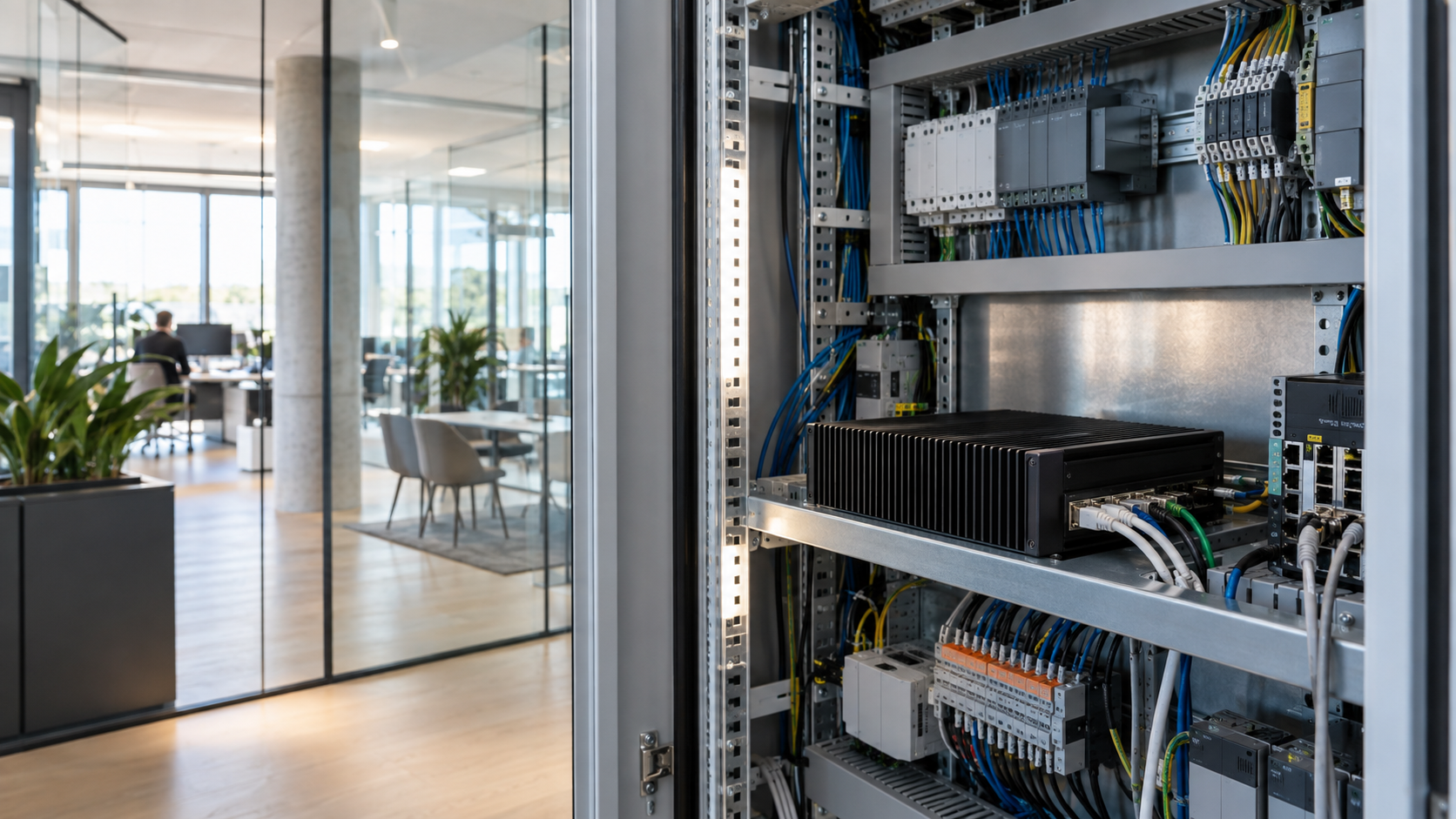
Connected edge computer in an office building control cabinet

Local control. Two-way communication with the cloud.

Edge sends data and insights to Cloud. Cloud sends optimisation commands back to Edge, which applies them through local controls within defined operating and comfort limits.

At the building

Building systems

Heating and ventilation
Energy meters
Sensors
Control systems

ProptechCore
Edge

ProptechCore Edge connects existing building systems and coordinates data, control and optimisation locally, within the building.

Local orchestration and control
Two-way communication

Data & insights to Cloud

Safe & controlled optimisation to Edge

The building team defines operating limits and permissions for the actions Cloud sends to Edge.

ProptechCore
Cloud

  • Cloud data management
  • Building optimisation apps
  • Portfolio visibility

Connected systems

ProptechCore Edge connects existing building systems and coordinates data, control and optimisation locally, within the building.

Local intelligence

Adapt heating and operations locally with apps that use building data and work within the limits set by your team.

Portfolio insight

Bring building data together, monitor performance and compare results across your portfolio. Give your team a shared view of day-to-day operations.

Put building data to work

Bring building insights into your workflows

Connect building data to business intelligence and external AI services through tailored integrations.

OpenAIClaudeGeminiBusiness intelligence

ProptechAssistant

Optimisation apps across Edge and Cloud

Local apps on Edge adapt heating, operating schedules and control signals to building needs and comfort targets. Cloud provides portfolio analytics, performance monitoring and optimisation through ProptechAssistant and decarbAI. Two-way communication turns insights into autonomous actions within agreed limits.

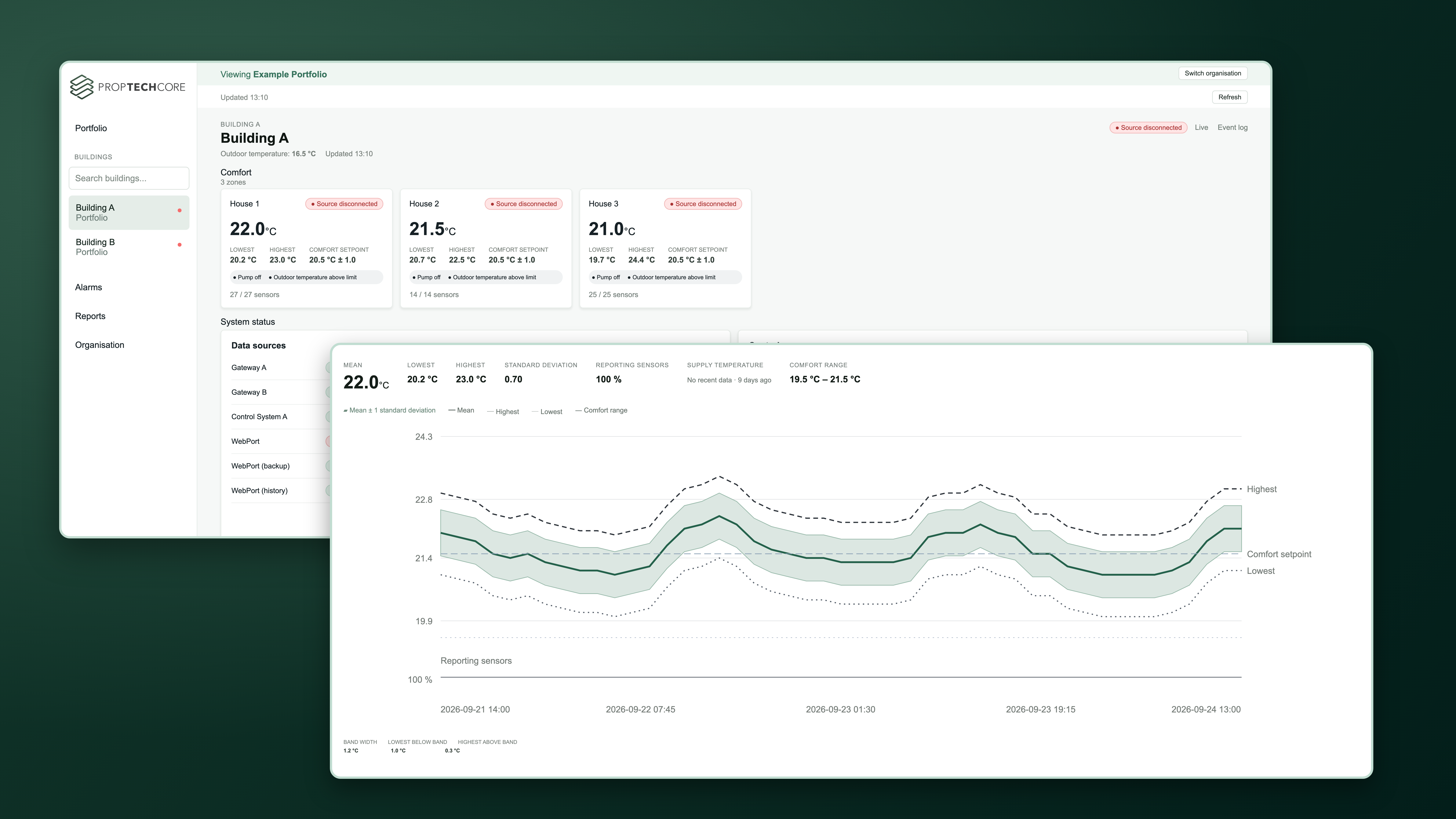
Example ProptechCore dashboard showing indoor comfort, system status and analytics
Illustrative product view with example data. The chart has been visually reconstructed from the reference image.

Less wasted energy. More value from every building.

Optimise operations around the clock with apps that adapt to temperatures, weather, occupancy schedules and available energy data. Agentic AI helps interpret changes, identify improvements and coordinate workflows. The building team defines comfort limits, permissions and which actions can run autonomously.

Adaptive heating control

Adapt heat supply and operating schedules to the building’s needs. Edge apps control systems locally, while Cloud apps help teams compare performance and improve strategies across the portfolio.

Energy · kWh

Track heating and electricity use in kWh against an agreed baseline. Account for weather, occupancy and operational changes when evaluating savings.

Emissions · CO₂

Translate measured energy changes into estimated CO₂ impact using the relevant energy source and emissions factors. Keep the calculation basis visible alongside the energy results.

Operating costs

Connect energy performance to tariffs and operating costs. Track the financial effect of optimisation alongside indoor comfort, and distinguish measured savings from forecasts.

From initial review to autonomous operation

Assess the building, connect its systems and improve operations step by step. The building team sets the goals and defines the limits for optimisation and autonomous actions.

  1. 01

    Explore

    Discuss the building, existing systems and operational goals.

  2. 02

    Survey

    Review equipment, data sources and integration requirements.

  3. 03

    Connect

    Connect ProptechCore Edge to the relevant building systems.

  4. 04

    Configure

    Configure data flows, analytics and optimisation apps across Edge and Cloud.

  5. 05

    Operate

    Monitor performance and refine the service with the building team.

  6. 06

    Optimise and automate

    Enable adaptive heating control and agentic workflows across Edge and Cloud. Let apps optimise operations and take autonomous actions within agreed limits.

Autonomous buildings, explained.

What is an autonomous building?

An autonomous building uses connected systems, data and automated control to adjust parts of its operation within goals and limits set by people. It can respond to changing temperatures, occupancy or energy demand instead of relying only on fixed schedules. Autonomy is a degree of capability, not an all-or-nothing label: some actions run automatically, while others require approval. The building team remains responsible for comfort, safety and operating priorities.

What is an agentic building, and how is it different from automation?

An agentic building uses AI agents to interpret conditions, plan tasks and coordinate approved actions towards an operational goal. Conventional automation follows predefined rules; an agent can help connect several steps, such as investigating unusual heating demand, proposing a change and checking the result. An AI recommendation is not permission to control equipment. Tool access, operating limits, human approval where needed and an audit trail should define what each agent can do.

What is a building edge device?

A building edge device is a local computer or gateway that connects equipment such as heating controls, ventilation, meters, sensors and a building management system (BMS). It can collect and translate data, run local logic and exchange information with cloud applications. A gateway that only forwards readings is different from an edge platform that can also execute control. ProptechCore Edge provides proprietary integration and local orchestration; the connected systems and enabled controls are defined for each installation.

Why is a building edge device important for system security?

Building controls affect physical equipment, so access must be managed carefully. A well-designed edge architecture can provide a controlled connection between building networks and external services instead of exposing each controller to the internet. It should be combined with network segmentation, authenticated and encrypted connections, least-privilege access, maintained software and logging. An edge device is not a security guarantee by itself. Remote commands should be authorised and checked against local operating limits, with existing safety interlocks preserved.

Why should a building keep working when the internet goes down?

Heating, ventilation and essential local control should not depend on a continuous internet connection. A resilient design keeps the required control logic and fallback settings in local controllers or the edge layer. During an outage, configured local operation can continue, while remote dashboards, cloud optimisation and external forecasts may be unavailable. Internet loss is different from a power failure. Offline behaviour, data buffering and recovery must be configured and tested for each installation; reconnection should not blindly replay outdated commands.

Why is two-way cloud communication important compared with analytics alone?

Analytics shows what is happening and helps identify improvements. Two-way communication also lets an authorised cloud application send an optimisation command back to the building, where local controls can validate and execute it. For example, a heating application can use a forecast to propose an adjusted schedule, apply it within approved limits and check the outcome. This creates a feedback loop from measurement to action and verification. Read-only analytics remains useful where control is not appropriate; write access should always be scoped and controlled.

What is an energy-adaptive building?

An energy-adaptive building adjusts energy use as conditions change while respecting comfort and equipment constraints. Relevant inputs can include weather, occupancy, indoor conditions, tariffs and the building’s thermal behaviour. For example, heating may start earlier on a colder morning or reduce output when demand falls. Lower energy use in kWh, lower peak demand in kW, lower cost and lower CO₂ emissions are different objectives and do not always move together. Results should be measured against an agreed baseline with appropriate adjustments.

How does automatic building optimisation work?

Automatic optimisation follows a repeating cycle: measure conditions, identify an adjustment, check permissions and limits, apply the change and verify the result. Typical actions include adjusting heating curves, ventilation schedules or temperature setpoints. Edge logic supports local execution while cloud applications can add forecasting and portfolio analysis. Start with reliable data and a limited scope, retain manual override and fallback settings, then expand after validation. Savings depend on the building, existing controls, operating conditions and the measures implemented; no fixed percentage applies to every property.

How does ProptechCore connect to our buildings?

ProptechCore Edge connects existing building systems and coordinates data, control and optimisation locally, within the building.

What does the cloud service include?

ProptechCore Cloud brings together building data, analytics and optimisation apps. ProptechAssistant provides a portfolio overview, while decarbAI supports analysis and optimisation.

How do we get a quote?

We tailor integration, deployment and ongoing service to your buildings, existing systems and operational needs. Contact us for a quote.

NEWS

Awards & news

Recognition for ProptechCore’s work in energy optimisation.

SET100 List 2025
Award

SET100 List 2025

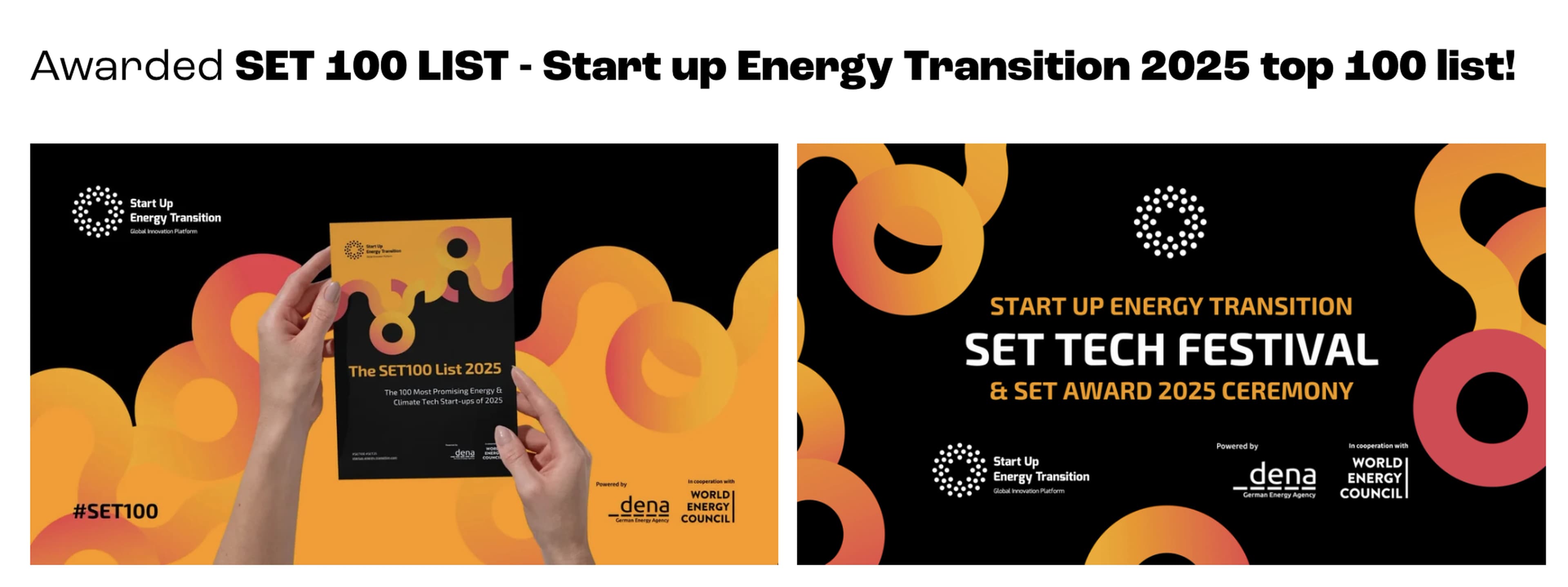
ProptechCore was named one of 2025’s 100 most promising energy & climate-tech start-ups by Start Up Energy Transition (dena / World Energy Council).

DeepTech Alliance Energy 2025
Programme

DeepTech Alliance Energy 2025

ProptechCore was selected for the DeepTech Alliance Energy 2025 Business Creation Program, alongside partners including Bosch, Repsol, Ørsted and bp.

300,000+ m²Connected building area

ProptechCore is used in buildings owned by some of Sweden’s largest property companies.

CASTELLUMSKANSKALF FASTIGHETER

Built around your buildings

We tailor integration, deployment and ongoing service to your buildings, existing systems and operational needs. Contact us for a quote.

Request a quote